Building an Alliance
The relationships formed in Kashka Suu gave the group a basis for continuing the work together. Whitley Fund for Nature helped make the gathering possible and supported the creation of the Ethical Conservation Alliance. “When you bring good people together, some really good things, sometimes even great things can happen,” Charu says. On 6 November 2023, ECA launched at the People for Planet Summit in London, bringing practitioners together to strengthen ethical conservation and Indigenous and community leadership.
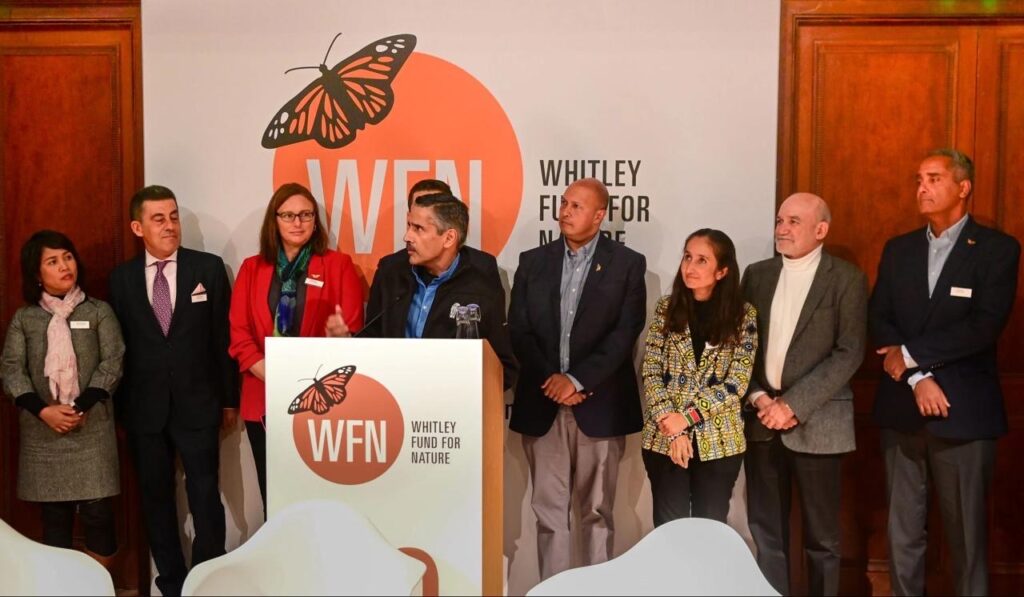 Photo Credit: Whitley Fund for Nature Snow Leopard Trust helped catalyze the alliance and continues to support it. ECA’s Steering Committee governs the alliance, while members develop the work through their experience with communities, wildlife, and ecosystems worldwide. Partners include organizations working with lions in Kenya, orangutans in Indonesia, penguins in Argentina, bats in Mexico, and marine communities in the Indo-Pacific. They bring different conservation settings to the same questions about rights, relationships, and responsibility.
For Shivani Bhalla, founder of Ewaso Lions, the close relationships Samburu communities in northern Kenya have with wildlife are central to conservation. “They look at elephants and they say elephants are our ancestors.” Hearing lions at night can signal hope. Losing wildlife also threatens those cultural connections. “For me they should be the decision makers,” she says. “This is their land, this is their wildlife.”
Hotlin Ompusunggu, a dentist and conservationist with Healthy Planet Indonesia, came to conservation with doubts. She questioned the effort spent on saving orangutans while people were dying from poverty and poor health. Working on an approach that integrated health and conservation changed her understanding. Orangutans disperse seeds and prune trees as they build nests, helping forests regenerate. Those forests sustain the water and air people depend on. “Caring for nature is caring for our own well-being,” she says. She continued practicing dentistry while bringing conservation into that work.
Hotlin remembers accompanying a woman to the police station after her goat went missing. The woman put on a nice dress for the visit. Facing an officer with more education and social standing, she found someone who listened for more than three hours and wrote down what she said. Afterward, Hotlin saw her face beaming. Community members became more willing to raise concerns and offer solutions. For Hotlin, being told that you have a voice means little without the experience of being heard. “We cannot solve the problem on our own,” she says. Working as equals begins with listening and recognizing what each person brings.
Rodrigo Medellin, a conservationist at the National Autonomous University of Mexico and co-founder of Global South Bats, brings another concern to the alliance: who gets to generate and share knowledge. Researchers have often arrived, gathered information, and left without maintaining relationships with the people who helped them. “We want to connect and empower the Global South,” he says. Conservation colleagues from Africa teaching people in Latin America and Asia offer one way to change whose expertise travels across borders. These exchanges also connect with the alliance’s commitment to making room for Indigenous knowledge and local wisdom in conservation.
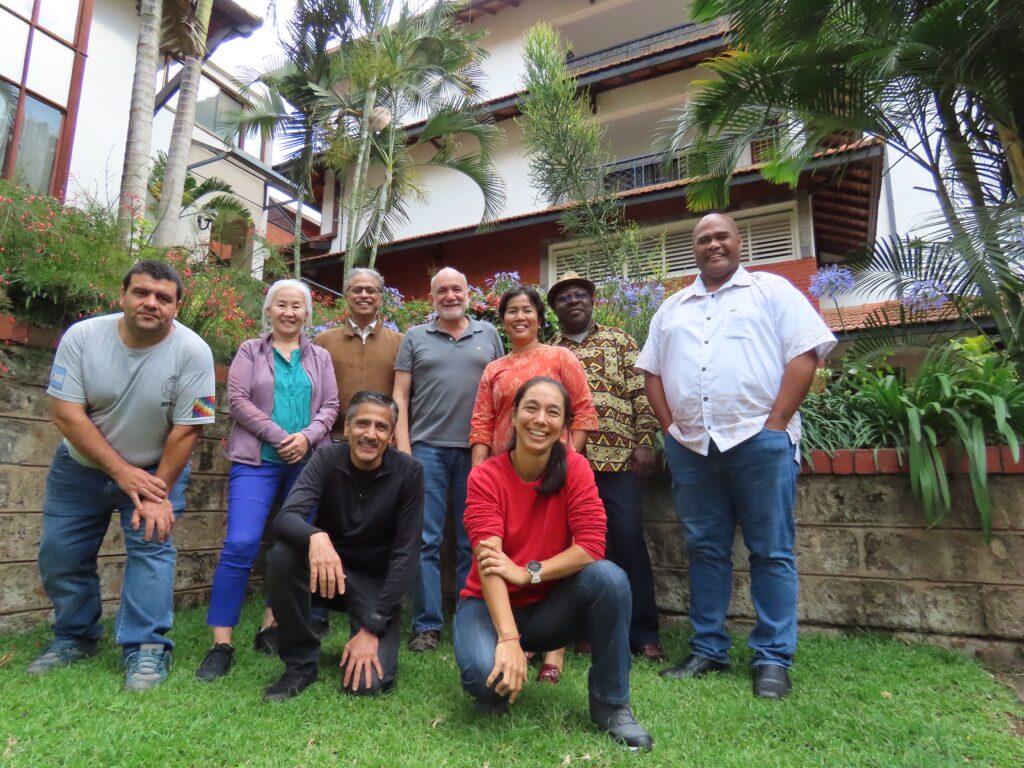 Members of the ECA Steering Committee and Secretariat Members join with their own experience and reasons for wanting to work together. Argentina’s Global Penguin Society describes the values it brings as “science-based action, respect for communities, and compassion for wildlife.” Nepal’s Small Mammals Conservation and Research Foundation seeks wider networks, support, and opportunities to strengthen ethical practice in the Global South. For the foundation, transparency, good governance, and inclusion help establish community ownership. Afghanistan’s Rupani Foundation emphasizes cultural and ecological well-being and equitable, community-led conservation. These commitments give the alliance a purpose that members shape together.
Training became one way members put those commitments into practice. Participants work through ethical dilemmas, practice listening and negotiation, and examine the difficulties of working with communities. Their own experiences contribute to the learning. Members helped develop the 2024 trainer’s guide. Early participants who had spent years building community relationships could help others make sense of their doubts and choices. That exchange helped lead to a formal training-of-trainers program.
Former trainees increasingly became trainers, while members adapted materials to their languages and circumstances. The alliance has published a Mongolian edition of the guide, and Spanish, Nepali, and Bangla translations are complete. People and institutions can adapt the approach while retaining a common ethical foundation. The alliance’s relationships and shared resources enable participants to carry that learning into their professional settings. |


